What is really in supermarket peanut butter
Peanut butter should be peanuts. Most supermarket jars have a longer story on the label. Here is how to read it.
WEnutbutter
Pick up a jar of peanut butter in any supermarket and read the small print. After the peanuts, most jars list vegetable oils, sugar, emulsifier, salt, sometimes hardened fats and a stabilizer or two. Peanut butter is one of those products where the label lists five ingredients under a one-ingredient name.
Every additive has a technical job, and every one of those jobs is about surviving storage and transport.
Palm oil keeps the jar from separating
Natural peanut butter separates. Oil rises, solids sink, and you stir before use. Manufacturers solve this with palm oil or other hardened vegetable fats that hold the mixture together at room temperature for months.
Hardened fats change the texture from spreadable to greasy, they mute the roasted peanut flavor, and palm oil carries a heavy environmental footprint. In return for a jar that never needs stirring, you give up most of what makes peanut butter taste like peanuts.
Sugar makes up for lost flavor
Peanuts that are roasted well do not need help. Peanuts that were roasted months ago and shipped through three warehouses do. Added sugar covers the gap between fresh-roasted flavor and what actually survives storage. Some big brands add more than 7 grams of sugar per 100 grams, in a product marketed as a protein staple.
Emulsifiers and stabilizers
Mono- and diglycerides, lecithin and hydrogenated rapeseed oil keep the product uniform for a year or more of shelf life. They are approved, tested and common. They are also completely unnecessary the moment peanut butter stops needing to survive a year on a shelf.
What fresh-ground peanut butter contains
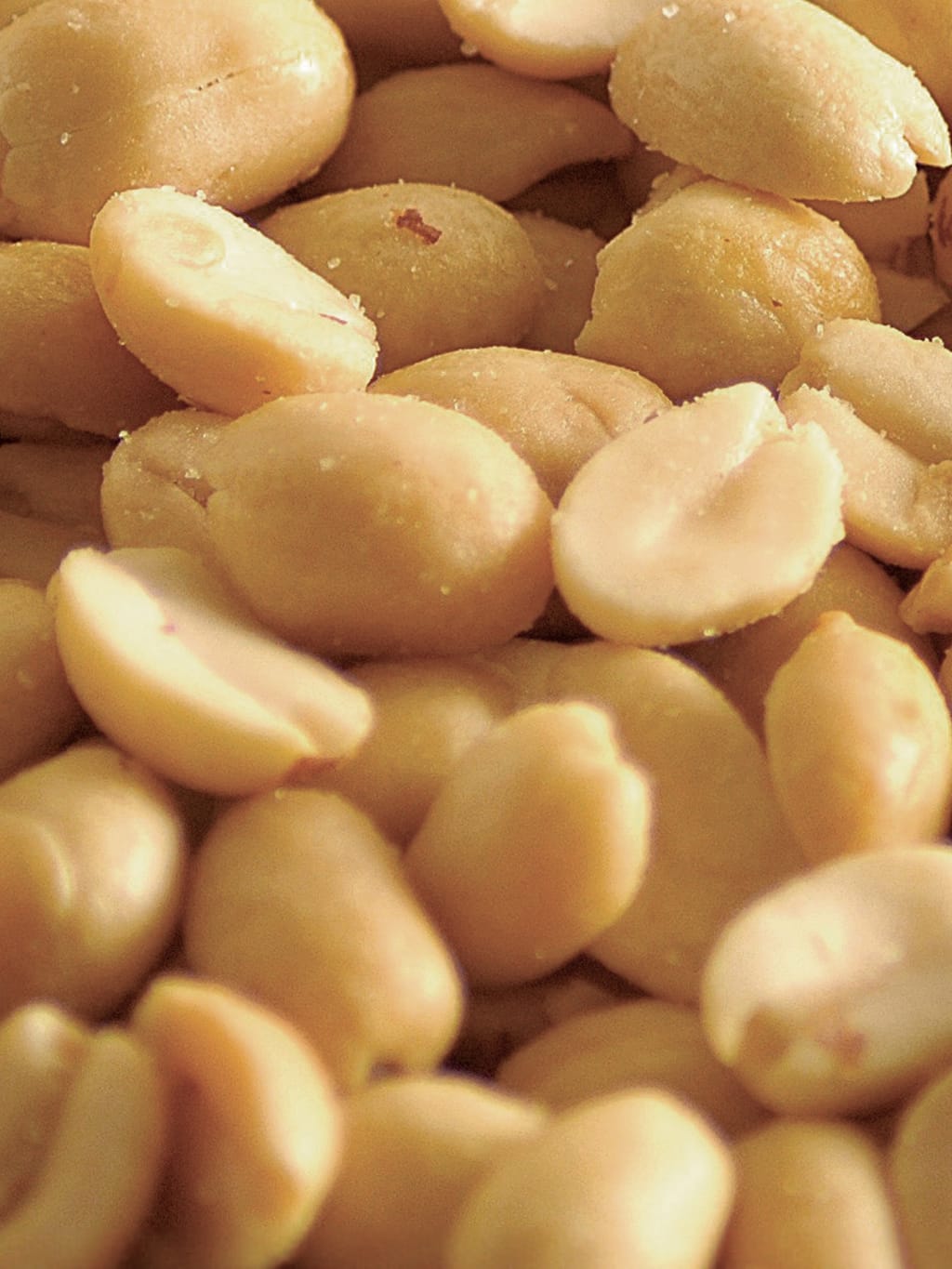
Just peanuts.
Grind roasted peanuts and you get peanut butter with nothing else in it. A fresh jar never has to survive months on a shelf, so palm oil has no job to do. The roast is hours old, so there is no faded flavor for sugar to cover. And you will finish the jar long before the oil separates, so emulsifiers can stay out.
Our WB02 nut butter mill behind a shop counter does this on demand. Peanuts, almonds, hazelnuts or cashews go into the hopper and butter comes out the front. What you see in the hopper is the complete ingredient list.
How to read any nut butter label
Run three quick checks.
- Ingredient count. One is perfect. Two (nuts and salt) is fine. Five or more means most of the label is there for shelf life.
- Fat sources. Any added fat besides the nut itself is there to fix texture and hold the jar together for months.
- Sugar per 100 g. Above a couple of grams, the sweetener starts to drown out the nut.
The zero-waste bonus
Fresh grinding also cuts packaging. Shops that grind to order let customers refill their own jars, so single-use packs disappear from the loop entirely. For stores, hotels and delis, a grinder turns a shelf product into an experience customers come back for.
Curious what that looks like behind your counter? Request a quote and we will walk you through hopper sizes, throughput and daily cleaning in ten minutes.
Not behind a counter yourself? Tell your local zero waste store or deli about WEnutbutter and the one-ingredient jar moves into your neighborhood.